
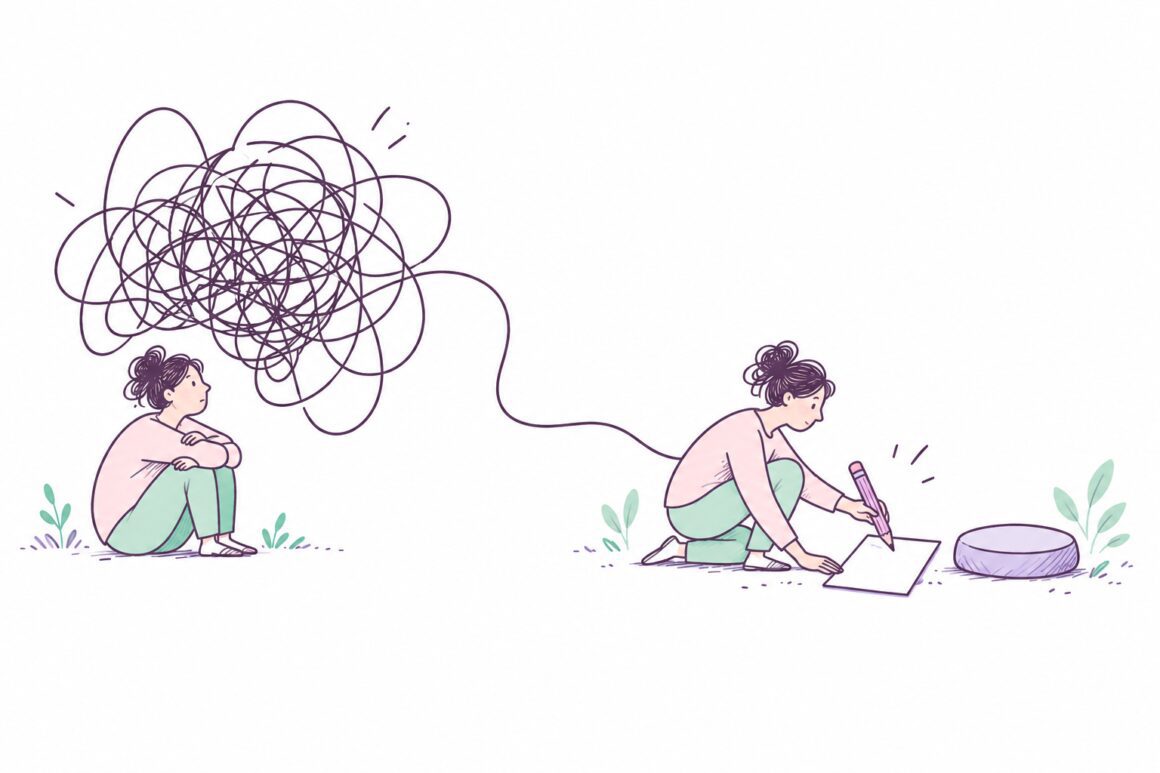
Changing “I can’t” to “How can I?” is not always the right move. Sometimes you do need a skill to practice; sometimes you lack information, time, money, access, or support. Sometimes the answer is that the goal is not right for you. A useful reframe helps identify which situation you are in—it does not require pretending every barrier is a mindset problem.
Use the short check below when a task feels impossible or a first attempt goes badly. The aim is one honest next step, a request for help, or a decision to pause—not instant confidence.
First, identify what “I can’t” means here
Write the sentence you are saying to yourself, then add one concrete detail: “I can’t ___ because ___.” The “because” often points to a more useful question.
| If the obstacle is… | Ask… | A useful next move could be… |
|---|---|---|
| A skill gap | Which part can I practise or learn? | Choose one small practice task or ask for feedback. |
| Missing information | What do I need to know before acting? | Find a reliable source or ask someone who can answer. |
| Limited capacity or resources | What time, access, money, energy, or support is missing? | Reduce the scope, request help, change the timing, or rest. |
| A goal that no longer fits | Do I still choose this goal? | Revise it, pause, or say no without treating that as failure. |

A four-part reframe that stays honest
- Describe the task, not your identity. Replace “I’m bad at presentations” with “I lose my place when I reach the middle of the talk.” The second sentence gives you something specific to address.
- Name the actual obstacle. Is the next step unclear? Is there a skill you have not practised? Are you missing a resource? Write what you know, and mark assumptions as assumptions.
- Choose a response that matches it. Practise one section, ask a question, get support, reduce the scope, or decide that this is not the right goal.
- Set a small test and a review point. Pick an action you can complete, then decide when you will check whether it helped. A test gives information; it is not a verdict on your worth.

Example: “I can’t speak up in a meeting”
Instead of “I can’t speak up,” get specific: “I lose my thought when the discussion moves quickly.” The obstacle may be preparation or meeting pace, not an absence of confidence. A small test could be to write one question before the meeting and bring it on paper. If the group moves on, you could ask the chair whether there will be time for questions at the end. Afterward, note what made it easier and what still needs to change. If the meeting is not a safe place to speak, consider an alternate channel or support rather than blaming yourself.
Use a small if–then plan
Once you have a next step, connect it to a cue: “If it is 9 a.m. and I have the meeting brief, I will write one question before opening email.” Research on if–then plans suggests that linking a cue with an action can support goal pursuit across varied tasks; it does not remove barriers or guarantee completion. Keep the plan adaptable. See Gollwitzer and Sheeran’s meta-analysis, which reviewed 94 tests of implementation intentions: “If I do not receive the brief, I will ask when it will be available.”

Five prompts for a page in your journal
- What is the exact task or choice I am calling impossible?
- What evidence supports that thought, and what is still unknown?
- What part is a skill gap, information gap, resource limit, or question of fit?
- What is one action, request, or boundary that matches the obstacle?
- When will I review the result and decide whether to continue, adjust, or stop?
If you want a separate method for starting a task you have been putting off, read our guide to choosing a workable first step. For a reflection that softens self-criticism without denying responsibility, see our self-compassion journal prompts.
A reframe should make the next choice clearer
You do not have to replace every “I can’t” with “I can.” Try to understand what the sentence means, then choose between practice, information, support, a smaller scope, or a different goal. Progress may be a first attempt—or it may be the decision to stop pursuing something that no longer fits.