

A useful self-compassion journal entry does not require you to praise yourself or pretend a painful situation is fine. It helps you describe what happened accurately, respond to yourself with the care you would offer someone you respect, and choose one realistic next step.
This guide offers a short method, eight prompts for different situations, and a worked example. Use one prompt at a time. You can stop if writing makes you feel more overwhelmed.
What self-compassion means in a journal
Psychologist Kristin Neff’s foundational work describes self-compassion through three related ideas: responding to difficulty with kindness rather than harsh self-judgment, recognizing that struggle is part of being human, and noticing painful thoughts without treating them as the whole truth. These ideas are a way to frame reflection, not a promise that a journal entry will change how you feel. Read Neff’s 2003 paper in Self and Identity.
Self-compassion is not the same as excusing harm, avoiding responsibility, or insisting that everything is positive. If you made a mistake, a kind response can still include an apology, a boundary, or a plan to repair what happened.
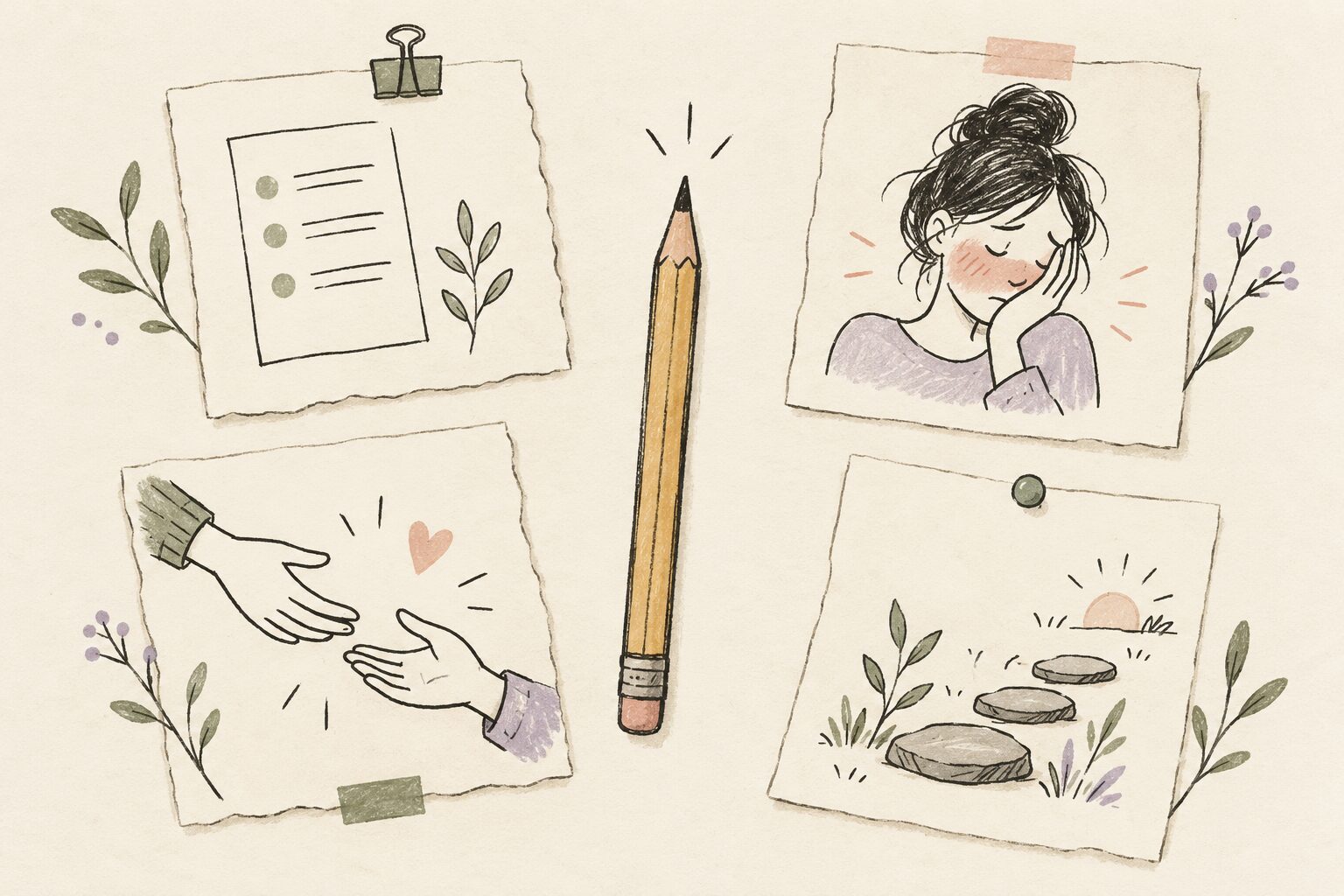
A five-minute method: fact, feeling, care, next step
Set a timer for five to ten minutes if a limit feels helpful. Write a few lines under each heading; fragments are enough.
- Fact: Describe what happened as if a neutral camera recorded it. Leave out labels such as “failure” or “disaster.”
- Feeling: Name what you notice, including uncertainty. “I feel embarrassed and tense” is more specific than “I’m a mess.”
- Care: Ask what a fair, supportive response would sound like. It can acknowledge responsibility and still avoid insults.
- Next step: Choose one small action within your control: clarify a misunderstanding, rest, ask a question, or try again tomorrow.

Eight self-compassion prompts, with when to use them
Choose the prompt that fits the moment. You do not need to complete all eight or follow a daily challenge.
After a mistake
1. What happened, what part was in my control, and what part was not? Separate responsibility from hindsight. This can keep a useful lesson from turning into a judgment about your whole character.
2. If repair is needed, what is one concrete repair I can make? Name the person or task, the next action, and a reasonable time. Self-kindness does not require skipping accountability.
When self-criticism is loud
3. What exact words am I saying to myself? Write the sentence down, then ask: “Is this a fact, an interpretation, or a prediction?”
4. What would I say to someone I care about who was in the same situation? Keep the response believable. You might write, “That was a rough meeting; one awkward answer doesn’t tell the whole story.”
When you feel alone or overwhelmed
5. What part of this experience might another person recognize? Do not minimize what happened. The point is to remember that having a hard day is not proof that you are uniquely broken.
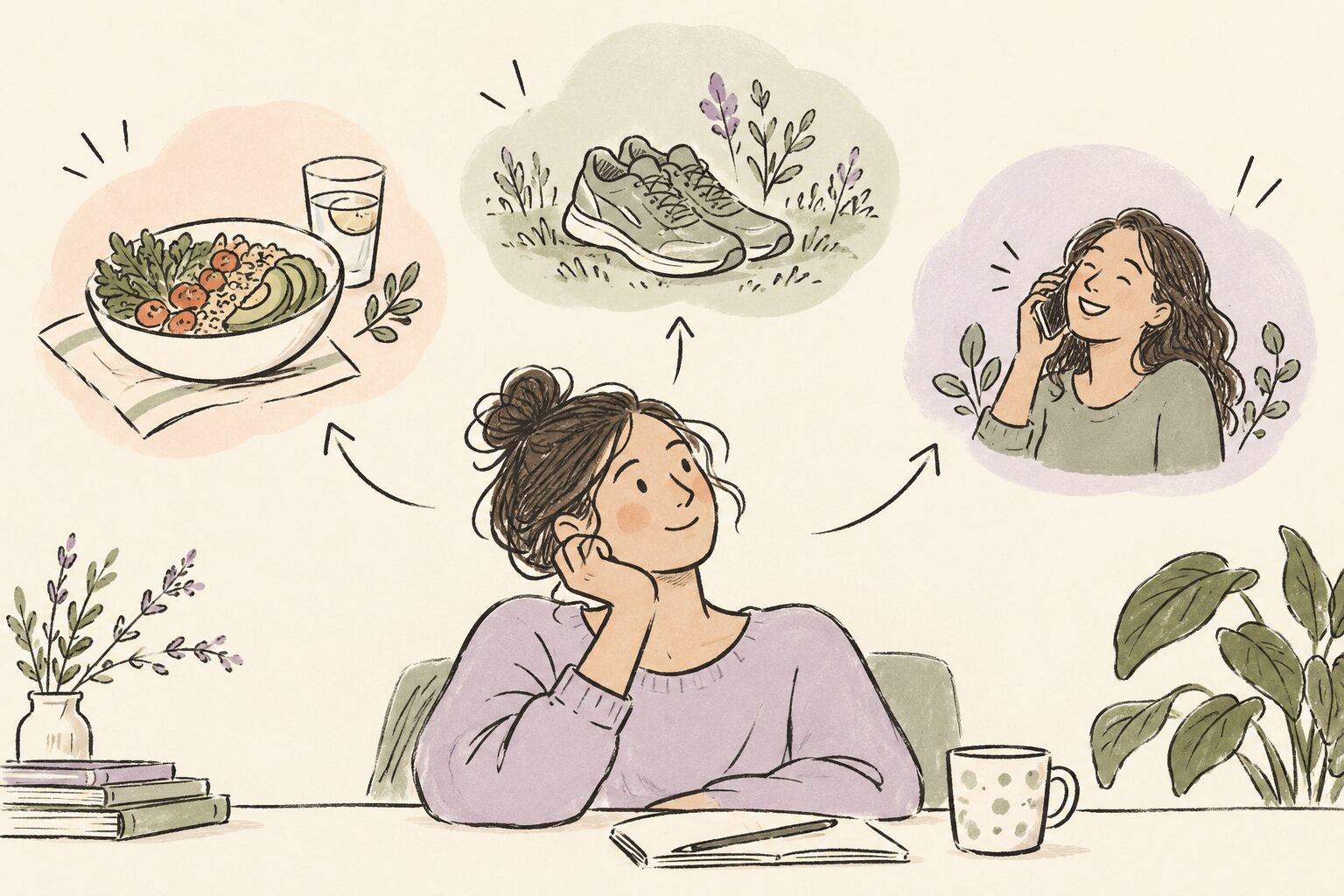
6. What would make the next hour a little more manageable? List ordinary supports: a meal, a walk, a short message to someone safe, or postponing a non-urgent task.
When you need to make a decision
7. What do I know, what am I assuming, and what information would help? This is especially useful when self-doubt is making a decision feel like a verdict on your worth.
8. What is one kind and honest next step? Write a step small enough to do, not a promise to transform your life. Include when you will do it and what might get in the way.
A worked example: missing a deadline
Fact: “I sent the draft a day after the agreed deadline.” Feeling: “I’m embarrassed and worried the editor has lost confidence in me.” Care: “A late draft affects someone else’s planning. It does not make me useless; I can acknowledge the impact without insulting myself.” Next step: “I’ll send a brief apology with a realistic delivery time and add a reminder for the next milestone.”
Notice what this entry does not do: it does not claim the delay was harmless, guarantee that the editor will be pleased, or demand that the writer feel confident. It makes the next responsible action easier to see.
If a prompt feels uncomfortable
Skip it, answer in bullet points, or write about something neutral instead. You can close the journal and do a grounding activity that feels safe. Reflection is optional; you do not owe a notebook your most painful memories.
Journaling is a personal reflection practice, not diagnosis or treatment. If distress is persistent, interferes with daily life, or you feel unsafe, consider reaching out to a qualified mental-health professional or local support service. In an immediate emergency, contact local emergency services.
Make this practice small enough to return to
Keep a page of the four headings—fact, feeling, care, next step—somewhere easy to find. On a difficult day, answer only one. On another day, you may prefer a more open-ended reflection on your inner critic or a practical exercise in body neutrality. The aim is not to write a perfect entry; it is to make room for a fairer and more useful response.