

A useful morning routine is not a test of discipline or a fixed list of wellness habits. It is a short sequence that helps you move from waking to the first thing your day requires. It can take five minutes, fit around caregiving or shift work, and include checking your phone when that is necessary for safety or work.
This guide gives you a way to design and adjust that sequence. Use only the parts that solve a real problem for you; there is no special benefit to completing exactly 60 minutes of activities.
Start with the morning you actually have
Before adding a habit, write down what your morning currently looks like for three ordinary days. Note when you wake, the first thing that needs your attention, where time gets lost, and what tends to make the start harder. Do not use an unusually perfect day as the model.
Then finish these sentences:
- By the time I need to begin work, school, or care, I need to have…
- The part that most often makes me feel rushed is…
- One small change I am willing to try for a week is…
Pick one friction point. If finding clothes takes time, set them out the night before. If you forget breakfast, decide on an easy option you already like. If notifications derail you, silence non-urgent alerts until a chosen time. Avoid trying to fix sleep, exercise, food, mood, and productivity all at once.
Build a routine from three useful parts
| Part | Question | Examples |
|---|---|---|
| Care for your body | What basic need should happen before I get absorbed in tasks? | Use the bathroom, take prescribed morning medication as directed, get dressed, eat if you prefer breakfast. |
| Orient | What do I need to know about today? | Check your calendar, weather, a care schedule, or one urgent message. |
| Begin | What is the first practical action? | Pack a bag, open the document, prepare the room, or start the commute. |
These are prompts, not rules. Some people need to begin with a child’s needs or an early shift. Some need quiet before conversation; others prefer a quick check-in with family. Choose an order that reduces a specific difficulty without creating a new burden.

Three versions to adapt
When you have five minutes
- Take care of the one physical need you have been postponing.
- Check only what could change your immediate plan, such as a schedule or transport update.
- Write or say the first next action: “Put lunch in my bag” or “Open the project file.”
When you have about twenty minutes
Add one optional activity that makes the transition easier: a few minutes of stretching, breakfast, a short walk, or a journal note. Keep it optional. If it makes you late or adds pressure, shorten it or remove it.
When your schedule changes
For night shifts, travel, school runs, or shared caregiving, define “morning” as the start of your waking period. Keep a small anchor that can travel with you: wash and dress, check the day’s first commitment, then prepare what you need to leave or begin. A routine that depends on a particular clock time or quiet room may not fit your life.
If your waking time is later or changes from day to day, our night-owl routine guide focuses on building a start around that schedule. To connect one small action to a reliable cue, see our habit-stacking guide.
Make phone use a choice, not a moral rule
Some people prefer not to open social apps right away. Others must check a work rota, medication reminder, accessibility tool, family message, or emergency update. Decide what phone use is useful, and make the rest less automatic. For example, open the calendar directly, keep urgent contacts available, and move distracting apps off the first screen. You do not need an analog alarm clock or a total screen ban to have a workable routine.
Try it for a week, then make one adjustment
For seven days, note whether your one change helped with the problem you picked. Use a simple record:
- What did I try?
- Did it make the morning easier, harder, or no different?
- What got in the way?
- Should I keep it, make it smaller, move it, or drop it?
A missed day is information, not a reason to restart a streak. If the routine repeatedly fails because the step is too large, reduce it. If the obstacle is outside your control, such as an unpredictable care task, plan a shorter fallback version instead.
A filled-in example
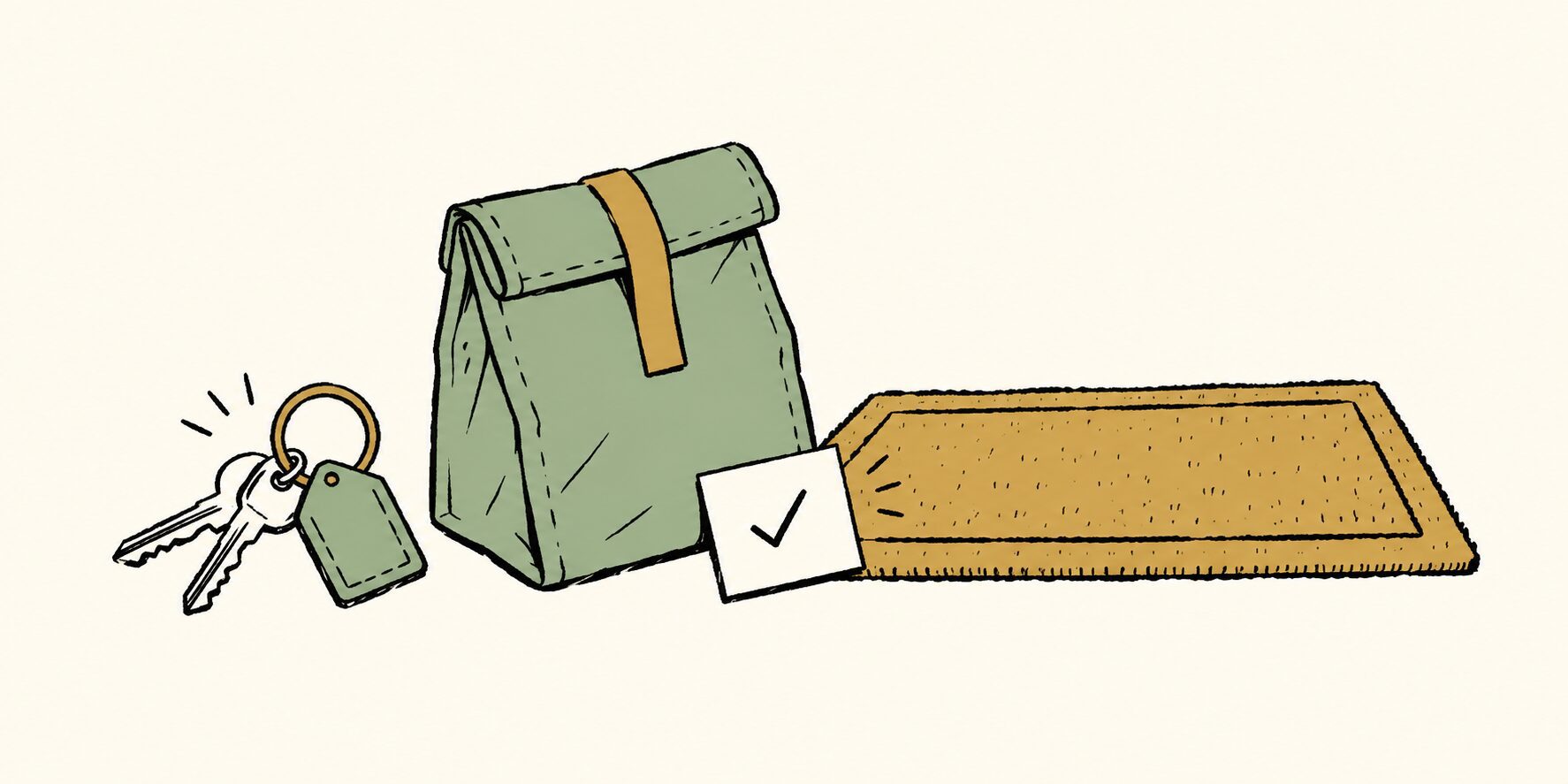
Sam has 25 minutes between waking and leaving for work. The recurring problem is searching for keys and lunch while trying to answer messages. For a week, Sam puts keys and a packed lunch by the door the night before, then checks the work schedule after getting dressed. On Friday, Sam notices that the preparation helped, but the schedule check still expands into messages. The next experiment is to open the rota directly and leave other messages for the commute. This plan addresses the actual bottleneck rather than copying someone else’s sunrise routine.

Use journaling to troubleshoot, not grade yourself
If you want to reflect, keep it brief: “What made starting easier today? What interrupted me? What is one adjustment worth testing?” A friction log can help you spot a recurring obstacle. Our friction log guide explains how to separate an observed snag from a possible fix. For more ways to write without requiring a long daily entry, see types of journaling and when to use them.
Keep what helps; let the rest go
The goal is not to “win” the morning or prove that you are productive. A good routine is one you can use on ordinary days, adapt when life changes, and leave behind when it stops helping. Start with one real friction point, test one modest change, and keep the parts that make your next step easier.
This is general habit-planning information, not medical advice. Questions about sleep, medication, or ongoing symptoms belong with a qualified health professional.
Reviewed October 4, 2026 by the Rise Within Journal editorial team.