
Categories

  • Confidence Building
  • Daily Habits
  • Journaling Prompts
  • Mindset Shifts
Rise Within Journal Rise Within Journal
  • Home
  • Confidence
  • Habits
  • Journaling
  • Mindset
  • About
    • Contact
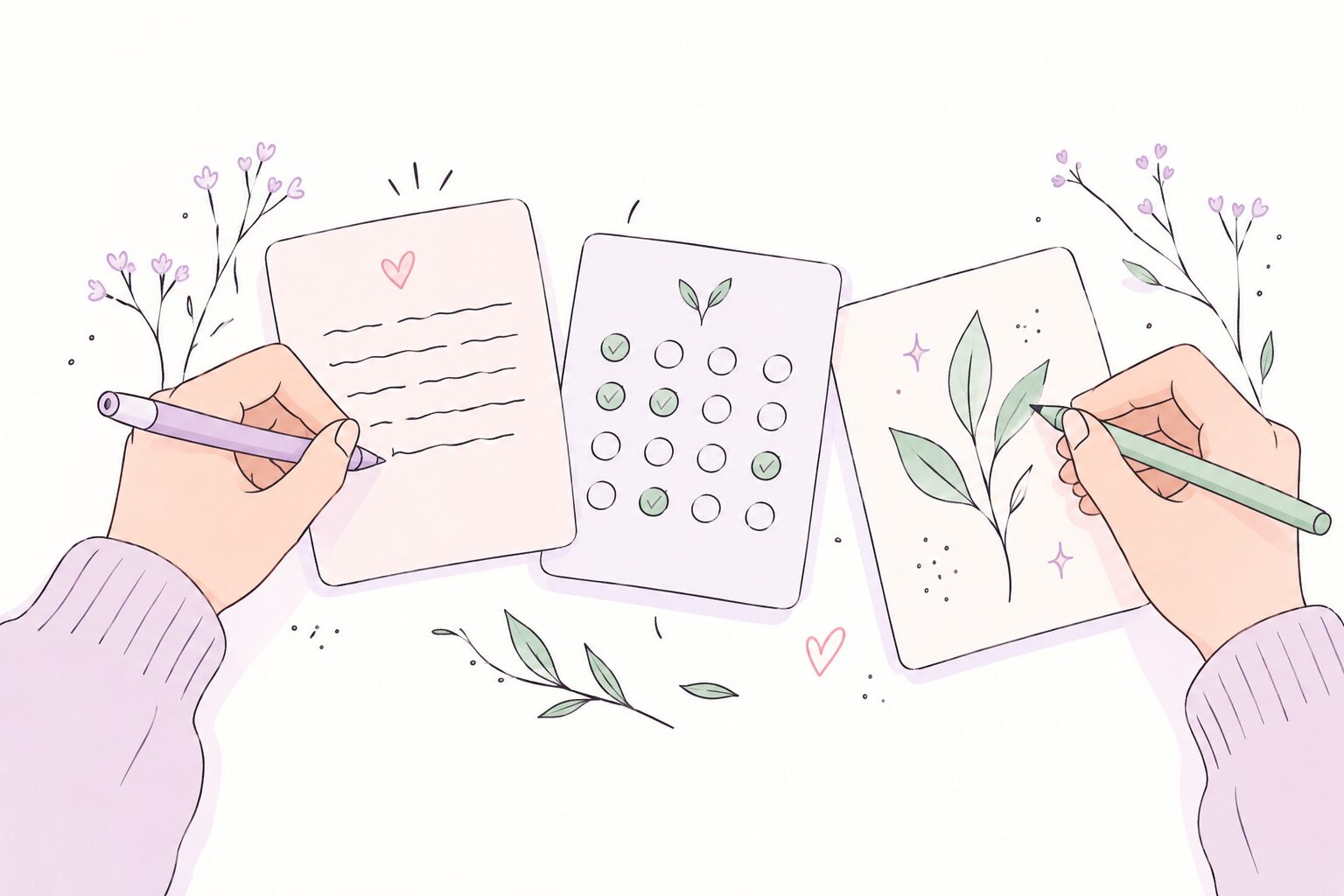
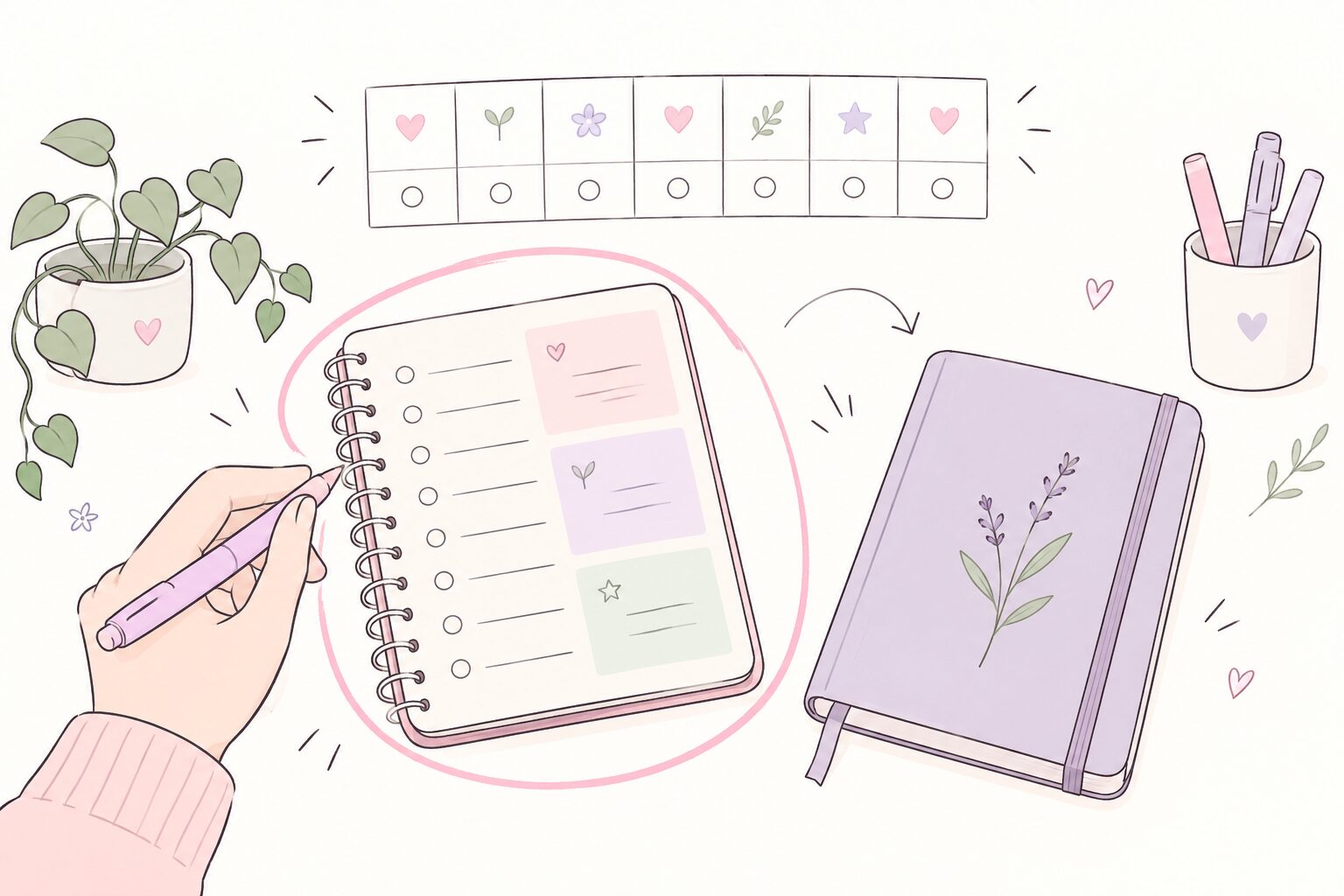
Aesthetic journal and pen on a desk setup explaining the best types of journaling
Total
7
Shares
0
0
7

Staring at a blank page. The pen hovers over crisp, unlined paper. You feel the physical weight of your own chaotic thoughts pressing against the back of your eyes.

You know you need to write. You know you need to scrape the noise out of your head. But absolutely nothing happens.

This paralysis is exactly why most notebooks sit abandoned in desk drawers. People mistakenly believe there is only one correct way to document their inner lives.

They force themselves into rigid diaries. They fail.

You just haven’t found the right match for your brain’s unique wiring. Different emotional states require entirely different types of journaling.

A mind racing with a hundred unfinished tasks needs a completely different approach than a heart heavy with unresolved frustration. I spent years forcing myself to write chronological summaries of my days.

It felt like a chore. It made me feel worse.

Then everything shifted. I stopped forcing one method and started matching my immediate psychological state to specific types of journaling.

The relief was immediate. You will experience this exact same release.

I will show you how to map your mind to the page. If you are entirely new to this practice, bookmark our journaling for beginners guide before reading further.

By the end of this manual, you will hold a complete arsenal of paper-based tools.

Table of Contents

Toggle
  • The Psychology Behind Different Types of Journaling
  • 9 Powerful Types of Journaling to Transform Your Mind
    • 1. Stream of Consciousness (The Morning Pages)
    • 2. Gratitude Types of Journaling
    • 3. Bullet Journaling and Rapid Logging
    • 4. The Brain Dump Method
    • 5. Future Self Types of Journaling
    • 6. Shadow Work Journaling
    • 7. The Friction Log
    • 8. Dream Types of Journaling
    • 9. The Five-Minute Format
  • The “Overwhelm Buster” Journal Spread
  • Tools, Setup, and Creating Your Environment
  • Moving Forward With Your Practice

The Psychology Behind Different Types of Journaling

Your brain is a prediction machine desperately trying to close open loops. When you leave a task unfinished, your mind refuses to let it go.

Psychologists call this the Zeigarnik Effect. Unfinished thoughts constantly interrupt your focus, draining your cognitive battery.

Writing things down acts as an external hard drive for your working memory. But treating all mental clutter the exact same way is a massive mistake.

Trying to process deep childhood trauma with a simple daily to-do list will not work. Trying to organize your chaotic Tuesday morning with deep emotional prose will only cause more anxiety.

You must match the tool to the friction. This is why exploring different types of journaling is non-negotiable for mental clarity.

Woman discovering effective types of journaling for emotional relief

When you select the right format, your nervous system responds physically. Your breathing slows. Your shoulders drop.

The cortisol flooding your system begins to recede. The physical act of handwriting forces your brain to slow down and process information sequentially.

You cannot write as fast as you think. This mechanical speed limit forces you to evaluate each thought before it hits the paper.

This creates emotional distance. You stop being the anxiety and start observing the anxiety.

9 Powerful Types of Journaling to Transform Your Mind

We will break down specific types of journaling you can deploy right now. Do not try to use all of them at once.

Pick the one that perfectly matches your current emotional blockage.

1. Stream of Consciousness (The Morning Pages)

This format is mental excavation. You wake up, grab a pen, and write exactly what crosses your mind without filtering a single syllable.

You do not care about grammar. You do not care about spelling.

If your thought is “I don’t know what to write and my coffee is cold,” you write exactly that. You keep the pen moving continuously for three whole pages.

The goal is to bypass your inner critic. Your conscious mind wants to curate and protect your image.

Stream of consciousness exhausts that filter. Around page two, the trivial complaints fade, and the actual subconscious fears bleed onto the paper.

Morning stream of consciousness practice among different types of journaling

You will feel a bizarre sense of lightness after completing this. The hidden anxieties running in the background of your mind suddenly lose their power once exposed to daylight.

Avoid reading these pages immediately after writing them. Let them sit.

2. Gratitude Types of Journaling

Most people ruin gratitude practices. They write “I am grateful for my family” every single day until the words lose all meaning.

To make this work, you must be hyper-specific. Force your brain to scan the last 24 hours for tiny, microscopic moments of joy.

Write about the exact temperature of the sun hitting your arm through the car window. Describe the precise taste of the first sip of water after a long walk.

This rewires your reticular activating system. Your brain starts actively hunting for positive inputs to report back to the notebook later.

For a complete breakdown of this specific method, study our gratitude journaling practice.

You will notice a shift in your baseline mood within two weeks. The world stops feeling like a series of threats and starts looking like a series of gifts.

Do not write more than three hyper-specific items per day. Keep the dosage small and potent.

3. Bullet Journaling and Rapid Logging

This is the ultimate system for the overwhelmed, analytical mind. It strips away the pressure of full sentences.

You rely entirely on rapid logging using short phrases and specific symbols. A dot represents a task, a circle represents an event, and a dash represents a note.

When a task is done, you cross it out. When it needs to move to tomorrow, you draw a right-facing arrow.

This format turns your notebook into a command center. It is highly structured, incredibly efficient, and visually satisfying.

If you constantly debate between structure and free-flow, you must read our breakdown on bullet journal vs long-form.

The physical act of migrating tasks forces you to confront your own procrastination. If you rewrite the same task for five days, you are forced to ask why you are avoiding it.

Bullet rapid logging as one of the structured types of journaling

Avoid turning this into an art project. Keep it ugly. Keep it functional.

4. The Brain Dump Method

Sometimes your brain feels like a browser with ninety open tabs playing audio from unknown sources. You cannot prioritize because everything feels equally urgent.

The brain dump is a tactical strike against this specific overwhelm. You set a timer for ten minutes.

You write down every single thing bothering you, from “pay the electric bill” to “I think my boss hates me.” You do not categorize them yet.

You just purge. The sheer volume of ink on the page might shock you.

Once the timer stops, you sort the chaos. You can learn the exact sorting matrix in our brain dump protocol.

You will instantly feel your chest decompress. The monsters in your head always look smaller when trapped on paper.

Brain dump exercises to declutter mind through types of journaling

5. Future Self Types of Journaling

This format builds a bridge between who you are today and who you want to become. Humans are notoriously bad at empathizing with their future selves.

We eat the junk food today because tomorrow’s stomach ache feels like someone else’s problem. Future self journaling fixes this disconnect.

You write a letter from the perspective of yourself five years from now. You describe your morning routine, the clothes you wear, and the exact view out of your window.

You write in the present tense. “I wake up at 6 AM feeling completely rested in my quiet coastal home.”

This creates cognitive dissonance. Your brain wants your current reality to match this written reality.

Mastering this technique requires intention, which we map out completely in our future self journaling masterclass.

You will start making micro-decisions that align with that future identity.

Future self exploration using specialized types of journaling

6. Shadow Work Journaling

This is not for the faint of heart. This format forces you to confront the parts of your personality you actively hide from the world.

Your jealousy, your petty grievances, your irrational anger. You bring the darkest parts of your psyche into the light.

You ask yourself brutal prompts. “Why did my friend’s success actually make me angry today?”

You answer honestly. You do not judge the feeling.

You just observe the ugly truth. This prevents your suppressed emotions from leaking out as passive-aggression.

If you are ready to stop running from yourself, our shadow work breakdown will show you exactly how to structure these sessions safely.

You will realize that your darkness cannot destroy you once you invite it to tea.

7. The Friction Log

This is a hyper-logical approach to personal growth. You track exactly what causes you pain or annoyance throughout the week.

Did your morning routine fall apart? Log it.

Did you snap at your partner over loading the dishwasher? Log the exact time and context.

At the end of the week, you review the log for patterns. You look for systemic failures in your environment.

Maybe you fight about the dishwasher every Tuesday because you both work late on Mondays. The friction log removes emotion from the equation.

Friction log tracking methods within various types of journaling

It treats your life like a faulty software program that just needs a few lines of code rewritten. You stop blaming yourself and start fixing the systems.

8. Dream Types of Journaling

Your subconscious mind processes massive amounts of emotional data while you sleep. Most of this data vanishes within thirty seconds of waking up.

Dream journaling captures this bizarre, unfiltered imagery. You keep a dedicated notebook open on your nightstand.

The moment your eyes open, you grab the pen. You do not look at your phone.

You do not even turn on a bright light. You scribble whatever fragments you can remember.

Over months, distinct emotional themes emerge. You will notice recurring symbols that correlate directly with your waking stress levels.

9. The Five-Minute Format

You do not always have an hour to dedicate to inner exploration. The five-minute format is the espresso shot of the journaling world.

You answer three specific questions in the morning. You answer three specific questions at night.

It bookends your day with intention and reflection. If you struggle with consistency, this is where you start.

You can read our full analysis on why this structure works in our five minute journal overview.

It requires zero creative energy. It simply demands five minutes of presence.

The “Overwhelm Buster” Journal Spread

I want to give you a physical, actionable layout you can draw in your notebook tonight. When panic sets in, draw this spread.

Take a blank page. Draw a line straight down the middle.

Draw a line straight across the center. You now have four quadrants.

Label the top left quadrant “What I Can Control.” Label the top right “What I Cannot Control.”

Label the bottom left “What I Need To Do Today.” Label the bottom right “What I Need To Let Go.”

Take ten minutes and fill the boxes. Start with the top right.

Pour all your anxiety about the economy, other people’s opinions, and the weather into the “Cannot Control” box. Look at it.

Accept that fighting these things is a waste of your oxygen. Now move to the top left.

Write down your immediate actions. You can control your breathing.

You can control your next meal. You can control your tone of voice.

This specific journal spread forces your brain to categorize threats accurately. It physically separates the unsolvable from the actionable.

Overwhelm buster layout shown in practical types of journaling

Tools, Setup, and Creating Your Environment

You cannot expect to do deep mental work using a cheap promotional pen on a flimsy napkin while sitting in a chaotic kitchen. The physical tools matter.

They signal to your brain that this activity holds weight. Get a notebook that feels good in your hands.

Paper weight changes the writing experience entirely. Look for 100gsm paper or higher.

Thick paper stops ink from bleeding through to the next page. It provides a satisfying drag against the tip of your pen.

Use a pen that requires zero downward pressure to deposit ink. Fountain pens or high-quality rollerballs are excellent.

When you have to press hard, your hand cramps. When your hand cramps, your brain wants to stop writing.

Remove the physical friction. The environment dictates the depth of the session.

Turn off the overhead lights. Overhead lighting feels like a hospital waiting room.

Turn on a warm desk lamp. The small pool of light creates a psychological boundary.

It visually isolates you and the notebook from the rest of the room. Leave your phone in a completely different room.

Do not just put it face down. Put it behind a closed door.

If your phone is visible, your brain constantly reserves a tiny fraction of its processing power waiting for a notification. You need 100% of your processing power directed at the page.

Moving Forward With Your Practice

You possess the methods. You know exactly why different types of journaling alter your brain chemistry.

You understand the absolute necessity of matching the tool to the specific emotional friction you are experiencing.

Do not try to implement all nine types tomorrow morning. That guarantees failure.

Look at your life right now. Are you drowning in daily tasks?

Start a rapid logging practice. Are you harboring unspoken anger?

Open a blank page and execute a brain dump tonight. Pick one format.

Commit to it for seven days. Pay attention to how your body feels after you close the notebook.

Your mind is a complex machine, but it responds predictably to targeted interventions. Grab a pen.

Sit down at the table. Take a deep breath.

Put the ink on the paper and watch the chaos drain out of your head. You have total control over the narrative you write next.

Total
7
Shares
Share 0
Tweet 0
Pin it 7
Luna Harper

Luna Harper is the founder of Rise Within Journal, a space dedicated to helping women build authentic confidence through intentional journaling and daily habits. After years of battling perfectionism and burnout, she discovered that true self-trust isn't about being the loudest person in the room—it's about keeping promises to yourself. When she’s not writing about mindset shifts or sharing prompts, you can find her drinking matcha, re-reading Atomic Habits, or filling up yet another notebook.

Previous Article
How to Build Real Discipline When You’re Surrounded by Distractions
  • Daily Habits

How to Build Real Discipline When You’re Surrounded by Distractions

  • July 2, 2026
  • Luna Harper
View Post
You May Also Like
A clean aesthetic desk setup for starting a friction log journaling practice to reduce stress.
View Post
  • Journaling Prompts

The Friction Log Journaling Method: A Simple Way to End Burnout

  • Luna Harper
  • May 2, 2026
A peaceful desk setup prepared for reading old journals for personal growth.
View Post
  • Journaling Prompts

10 Proven Ways for Reading Old Journals Without Cringing

  • Luna Harper
  • March 21, 2026
A cozy desk setup prepared for writing a letter to my younger self.
View Post
  • Journaling Prompts

7 Powerful Steps to Write a Letter to My Younger Self (Healing Walkthrough)

  • Luna Harper
  • March 21, 2026
Aesthetic desk setup featuring a journal used for clarifying your core values.
View Post
  • Journaling Prompts

20 Powerful Prompts for Clarifying Your Core Values and Finding Peace

  • Luna Harper
  • March 21, 2026
A peaceful desk setup designed for journaling through grief with a notebook and tea.
View Post
  • Journaling Prompts

Journaling Through Grief: 10 Powerful Steps to Heal Your Heart

  • Luna Harper
  • March 21, 2026
A cozy and organized nightstand setup prepared for a nightly dream journaling practice.
View Post
  • Journaling Prompts

Dream Journaling: 9 Powerful Steps to Decode Your Subconscious

  • Luna Harper
  • March 20, 2026
Minimalist desk setup with journal prompts for perfectionists
View Post
  • Journaling Prompts

10 Powerful Journal Prompts for Perfectionists to Stop Anxiety

  • Luna Harper
  • March 20, 2026
Aesthetic workspace for practicing the 5-minute journal method.
View Post
  • Journaling Prompts

8 Deep Ways the 5-Minute Journal Method Can Transform Your Life

  • Luna Harper
  • March 18, 2026

Leave a Reply Cancel reply

Your email address will not be published. Required fields are marked *

Recent Posts

  • Types of Journaling: Find the Best Method to Free Your Mind
  • How to Build Real Discipline When You’re Surrounded by Distractions
  • The Friction Log Journaling Method: A Simple Way to End Burnout
  • Why Reaching Your Goals Can Feel Empty (And How to Fix It)
  • The Habit Automation System: Stop Relying on Willpower

Subscribe

Subscribe now to our newsletter

Rise Within Journal Rise Within Journal
  • Privacy Policy
  • Terms and Conditions
  • Editorial Policy & Medical Disclaimer
  • Contact
  • About
Created for reflection. Inspired by becoming.

Input your search keywords and press Enter.