
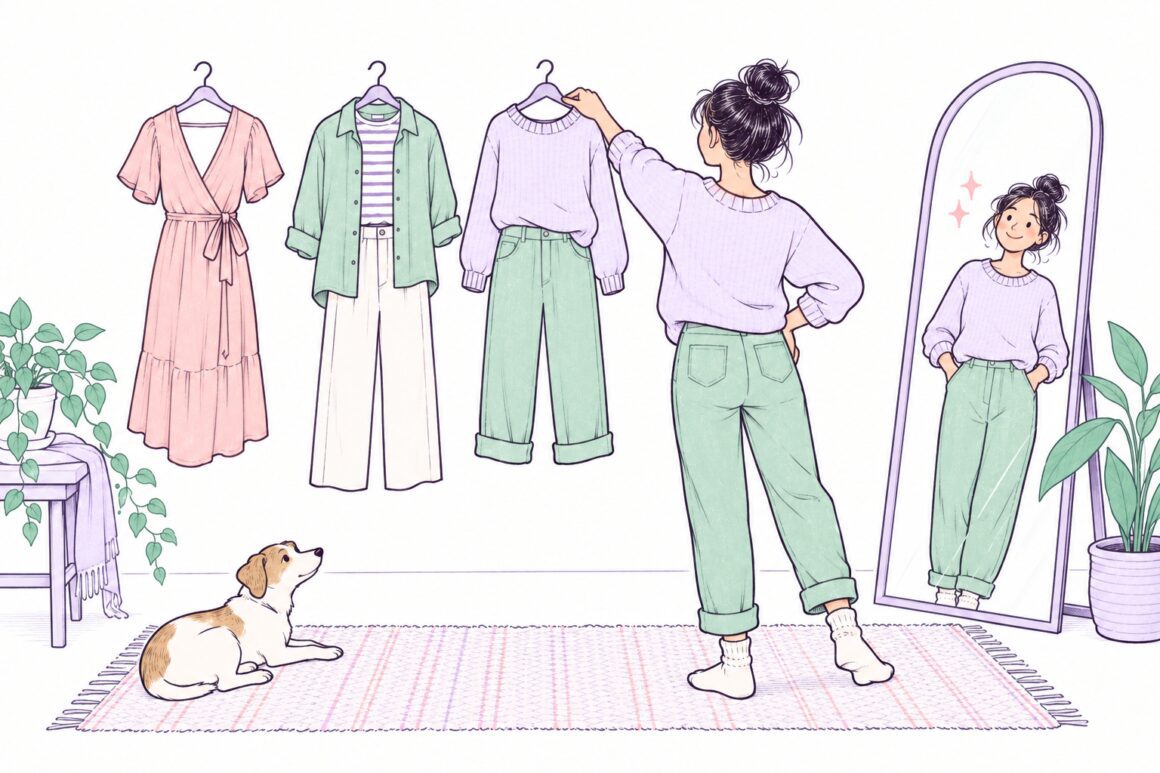
Clothes can change how comfortable or prepared you feel in a particular setting, but no outfit can guarantee confidence, success, or other people’s approval. A useful choice starts with the day’s demands—weather, movement, dress code, sensory comfort, and what you already own—then removes avoidable distractions.
This guide offers a simple way to choose an outfit for a meeting, presentation, interview, or ordinary day without treating your body or wardrobe as a problem to fix.
What research on clothing does—and does not—show
A 2012 study by Hajo Adam and Adam Galinsky tested whether wearing a lab coat, and the meaning participants associated with it, affected performance on attention tasks. That narrow finding does not establish that fashionable clothes create lasting confidence, improve job performance, or work the same way for everyone. Later direct replication work has also questioned the robustness of the reported attention effect. Treat clothing as one personal preparation choice, not a psychological hack. Adam and Galinsky’s study; replication record.

A five-question outfit check
- What is happening? Check the dress code, weather, walking, sitting, and any equipment or safety needs.
- What must the outfit let me do? If you will present, carry items, commute, or sit for a long time, choose clothes and shoes that work for those movements.
- What tends to distract me? Think about itchy seams, overheating, slipping straps, shoes that hurt, or a garment you keep adjusting. Comfort is individual.
- What do I already own that fits? Start with clean, available pieces. There is no need to buy something new for a confidence exercise.
- What would make the choice feel like mine? One color, layer, accessory, or familiar piece can be enough. You do not need to build a new persona.
Build an outfit around the task, not a “power look”
Use a simple base: a comfortable top and bottom that suit the setting, a layer for temperature, and shoes appropriate for how you will move. Adjust this to your climate, culture, faith, mobility, sensory needs, and workplace expectations. These are options, not universal standards.
For an important presentation, for example, choose clothes you have worn before and can stand, sit, and reach in. If the room is cold, add a layer. If you do not know the dress code, ask the organizer what is typical rather than guessing from social-media advice. Your preparation for the material still matters more than a “confidence outfit.”

Adjust the choice to the situation
| Situation | Useful question | Practical choice |
|---|---|---|
| Interview or client meeting | What is the stated or typical dress code? | Ask the organizer if it is unclear; wear something clean and familiar that fits the setting. |
| Long day on your feet | Can I walk comfortably for the time I expect? | Prioritize supportive shoes and layers that can handle temperature changes. |
| Sensory or mobility needs | Will fasteners, seams, or movement demands distract or limit me? | Choose textures and closures that work for your body and routine. |
| Video call from home | What will be visible, and what helps me feel ready? | Choose a comfortable top and check lighting or background once; skip unnecessary purchases. |
A ten-minute preparation for tomorrow
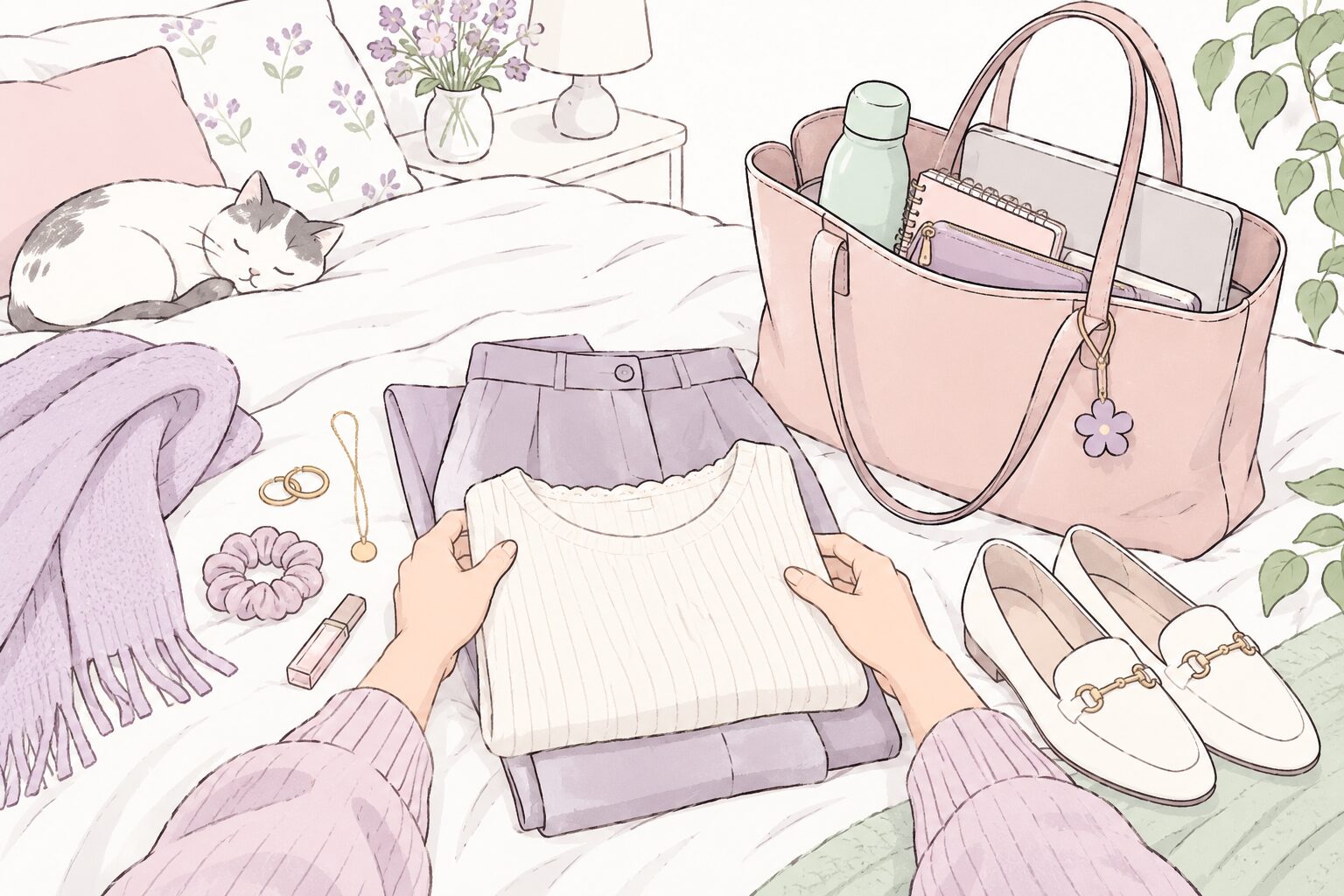
Lay out one possible outfit and test the movements you will need: sit down, raise your arms, walk in your shoes, and carry your bag. Check the weather and dress code once. If something pinches, slips, or needs constant adjustment, swap that item for a familiar alternative. Put the pieces together where you can find them, then stop planning.
If getting dressed brings up body worries
Keep the task practical: choose an outfit that covers what you want covered, lets you move, and meets the situation. You do not have to earn the right to participate by changing your body or buying new clothes. If appearance concerns are causing sustained distress or affecting daily life, consider talking with a qualified professional.
Confidence also grows from preparation, practice, boundaries, and support. If self-criticism is making a small task feel like a judgment of your worth, try our self-compassion journal method. A useful outfit can support a moment; it cannot do the work of a whole confidence practice.
Choose, check, and get on with your day
Pick clothes suited to the setting, comfortable enough for the tasks ahead, and familiar enough that you can focus on what you came to do. That is a reasonable wardrobe decision—not a secret formula. Then direct your attention to the meeting, conversation, or work itself.