
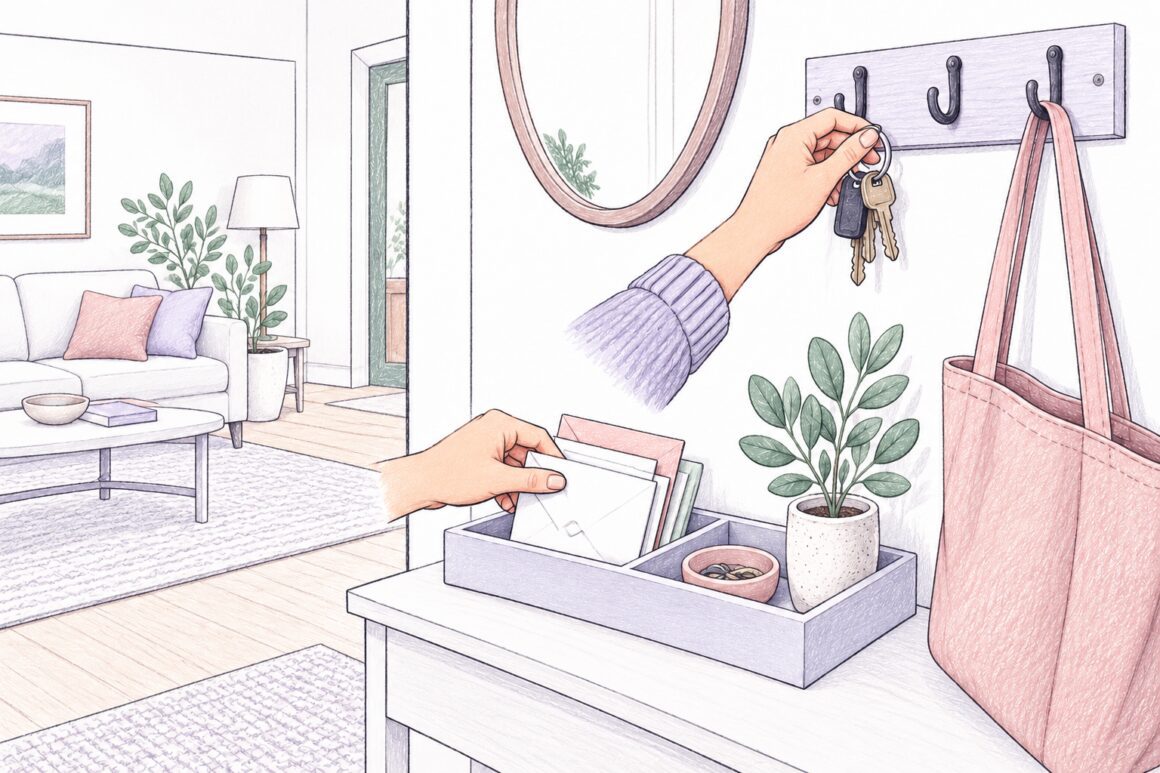
When a room feels crowded, a full-home decluttering plan can make the first step harder. Start with one place that repeatedly slows you down: the entryway where keys disappear, the counter where mail piles up, or the chair that collects clothes. The aim is not a perfect-looking home. It is to make one everyday task easier without buying supplies or taking on work that is not yours.

Use the One-Area Reset
Set a short time limit, such as 15 minutes. Pick an area small enough to finish: one shelf, one section of a counter, or the space beside the front door. If your energy, mobility, caregiving duties, or schedule are limited, choose a smaller area or split the reset into several brief sessions. Stopping on time is part of the plan.
1. Name the recurring friction
Describe the problem as an action, not a judgment about yourself: “I search for my keys before leaving” is more useful than “I am disorganized.” Notice what collects here and when it happens. The point is to understand the job the area needs to do.
2. Clear only what is in scope
Move items from the chosen surface or shelf, then sort them into four temporary groups: belongs here, belongs elsewhere, needs a decision, and rubbish or recycling. Do not open nearby cupboards or expand into another room. If an item belongs to someone else, set it aside for them rather than discarding or relocating it without agreement.
3. Put frequent-use items within easy reach
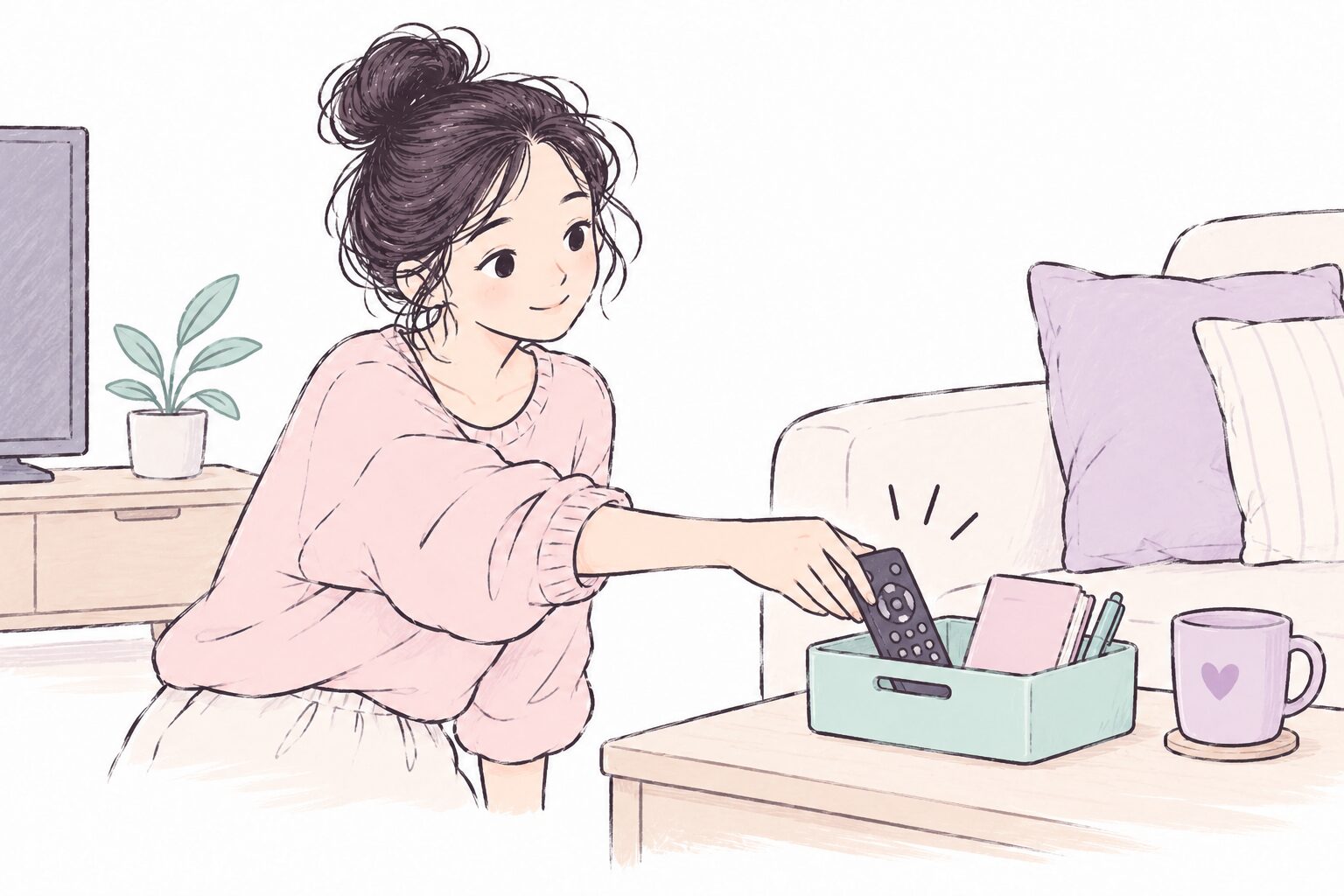
Return only what supports the area’s job. Daily items should be easy to reach; occasional items can live farther away. Keep the solution simple: a bowl for keys, a folder for mail that needs attention, or a hook at a usable height. Use a container you already own before buying one.
4. Make an exit plan for the items that leave
A pile marked “donate” is not finished if it stays in the hallway for months. Choose the next action and a realistic time: put the item in the car after work, add it to a collection bag, or ask the right person where it belongs. For uncertain or sentimental belongings, use a labeled review box and decide later; there is no need to force a permanent choice today.
Match the change to the problem
| What keeps happening | Small change to test | How to tell if it helps |
|---|---|---|
| You cannot find keys | Choose one visible landing place near the door. | You can leave without searching most days. |
| Mail covers the counter | Separate mail that needs action from mail to recycle; choose one review time. | Important letters are easier to find and the surface stays usable. |
| Clothes collect on a chair | Add one accessible hook or basket for items that can be worn again. | The chair is available when you need it. |
| The area fills up again quickly | Reduce the number of items stored there or choose a more convenient home. | Putting things away takes fewer steps. |
| Several people use the space | Agree on a shared drop zone and leave personal items for each person to manage. | The arrangement feels fair and others can find their things. |

Review the setup before adding more rules
Try the arrangement for a few days. Ask: Did it reduce a search, a repeated decision, or an avoidable interruption? What still lands here? If an item keeps returning, that is information: its current home may be inconvenient, the routine may not fit, or the task may need to be shared. Adjust the setup before blaming yourself or adding a longer checklist.
Keep safety and access in view. Leave walkways clear, avoid placing heavy objects high up, and do not discard documents, medication, or another person’s belongings without checking. If sorting feels distressing or the amount of clutter is affecting safety, a small solo reset may not be enough; consider asking a trusted person or appropriate local professional for support.
A five-line plan
- The area I am changing: __________
- The task that keeps getting harder: __________
- What belongs here for daily use: __________
- One item or pile that needs a next action: __________
- When I will check whether this setup works: __________
One workable corner is enough for today. If a short review of the coming days would help, see our flexible weekly reset guide. For routines that are easier to begin when useful items are in reach, read the habit planning system. You can also use a brief journal note to record what keeps creating friction and what actually changes it.