

A phone-use reset is a short experiment in changing one part of your relationship with your device. It does not require deleting every app, going offline for a full day, or giving up tools you rely on for work, safety, health, accessibility, caregiving, or connection. Use these seven days to notice a pattern, test one small boundary, and keep only changes that make your days work better.
Before you begin: decide what you want to change
Choose one situation rather than judging your overall screen-time number. Maybe you open a social app while waiting for a message, lose time before bed, or keep checking news during a task. Write down what you hope to make easier: finishing a specific activity, having an uninterrupted conversation, finding a calmer transition to bed, or simply being more deliberate about when you check.
Screen-time data can help you notice a pattern, but it does not measure whether use is good or bad. Messaging family, using transit directions, reading, and work calls can all appear as screen time. Keep essential functions available. If you share a device or rely on it for safety or assistance, do not change settings that would make those needs harder to meet.
A flexible seven-day experiment
| Day | Try this | Note |
|---|---|---|
| 1: Observe | Notice one moment when you open your phone without a clear reason. You do not have to stop yourself. | What was happening just before? What were you looking for? |
| 2: Pick one boundary | Choose a place, activity, or time window for a phone break, such as the first ten minutes of a meal or one planned reading session. | Does this boundary fit your responsibilities? |
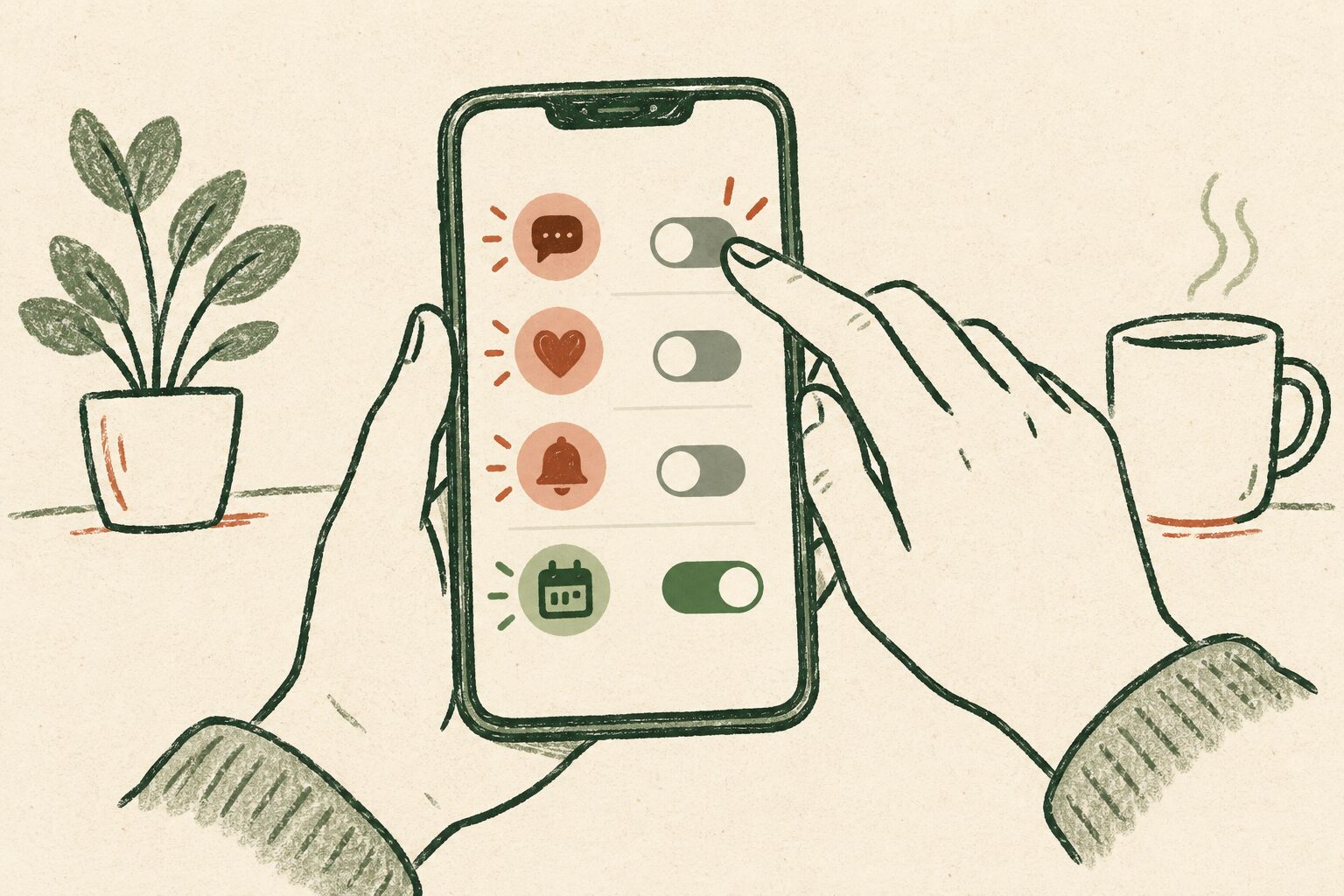
| 3: Adjust alerts | Silence one category of nonessential notifications or use a Focus setting for a short, chosen block. Keep alerts you need for safety and important people. | Did fewer interruptions help? Did you miss anything important? |
| 4: Change the setup | Move one frequently opened app off the first screen, sign out, or place the phone somewhere reachable but not in your hand during the chosen activity. | Which small change made you pause? |
| 5: Choose a replacement | For one common trigger, pick another option that meets the same need: message someone, take a short break, read, or write a note. | What need were you trying to meet? |
| 6: Test a realistic limit | Set a modest check-in window for one app or take a break from it for a period that suits your life. A partial reduction is a valid experiment. | Was this practical? How did it affect connection or tasks? |
| 7: Review | Compare the experiment with your starting point. Keep, adjust, or drop each change. | What helped enough to repeat next week? |
What research can—and cannot—tell us
One randomized study asked undergraduate participants to limit Facebook, Instagram, and Snapchat use for three weeks. The researchers reported changes in loneliness and depressive symptoms for that study group. Its participants, selected platforms, short duration, and study conditions do not show that every person needs a social-media break or that a seven-day phone reset treats anxiety or depression. The study by Hunt and colleagues (2018) is one piece of evidence, not a prescription.
Keep the parts that serve you
At the end of the week, decide separately for each change. You might keep one quiet work block but turn alerts back on for the people who matter. You might use a phone-free dinner when everyone agrees, but not apply it to meals when you need to coordinate care. A reset is not a purity test, and using an app again does not undo what you learned.
- The moment I wanted to change: ____________________
- The small boundary I tested: ____________________
- What became easier: ____________________
- What became harder or less accessible: ____________________
- One change I will keep, adjust, or drop: ____________________

If you want an offline alternative during one chosen break, our reading habit guide helps fit reading to available time, and our beginner journaling guide offers a simple writing prompt. Choose an alternative because it meets your needs—not because every phone moment must be replaced.
The useful question is not “Did I detox perfectly?” It is “Which change, if any, helped me use my phone more intentionally without making important parts of life harder?”