
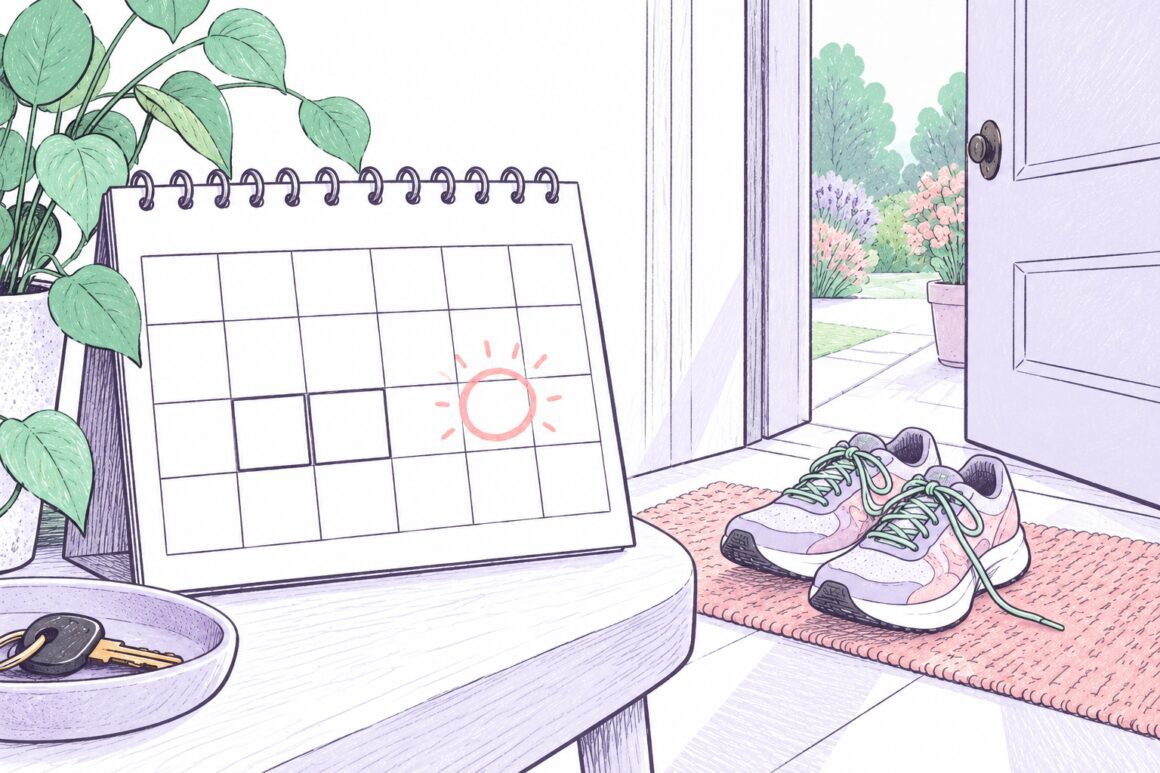
The “two-day rule” is a simple reminder: after missing a planned habit, try to return at the next suitable opportunity instead of letting one missed session quietly become a long pause. It can help some people interrupt all-or-nothing thinking. It is a planning heuristic, though—not a scientifically established deadline, a test of character, or a rule that fits every habit.

What the rule can—and cannot—do
In a 12-week study, 96 volunteers chose a daily eating, drinking, or activity behavior and repeated it in a consistent context. The researchers found that habit development varied widely; missing one opportunity did not materially affect the process in that study. It does not show that everyone should follow a two-day schedule, or that any particular lapse is harmless in every situation. It does offer a useful correction to the idea that one missed day erases progress. Lally and colleagues’ study (2010) is the source.
Think of “never miss twice” as a prompt to make a next-step plan, not an order to push through illness, injury, exhaustion, caregiving, access barriers, or a needed rest day. A sustainable routine has to fit the person and the circumstances.

Decide what “returning” means for your habit
Before using a missed-day rule, define the behavior and its normal rhythm. “Write in my journal after breakfast on weekdays” is clearer than “journal every day.” “Take the walk I planned for Tuesday” leaves room for planned recovery days. Choose an action you can control; outcomes such as losing weight, feeling confident, or finishing a project are not daily habits.
| What happened? | A reasonable response | What to avoid |
|---|---|---|
| You forgot or the usual cue changed | Pick the next realistic cue and make the first step easy to see. | Adding a second session as punishment. |
| Your day was unusually full | Return at the next planned opportunity, or move the session if that suits you. | Calling a schedule change a personal failure. |
| You are ill, injured, or depleted | Rest or follow suitable professional guidance; resume when appropriate. | Using a streak rule to override recovery or safety. |
| The habit feels too demanding most weeks | Reduce its duration, frequency, or difficulty, or choose a better cue. | Repeating an unrealistic plan and blaming motivation. |
| You have missed several opportunities | Look for a practical barrier and redesign the plan; restarting small is allowed. | Waiting for Monday, a perfect mood, or a fresh month. |
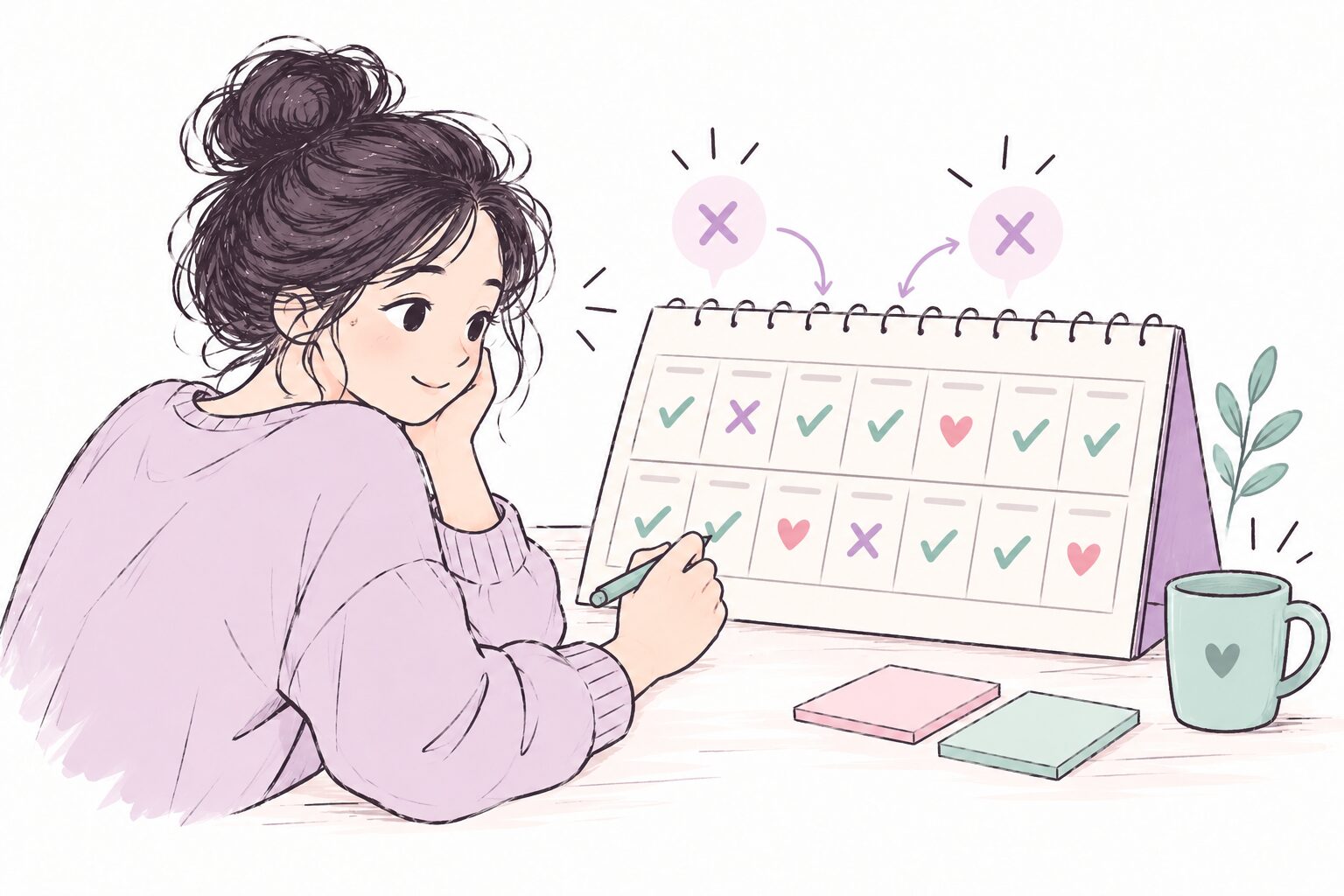
A restart plan in four steps
- Name the observable action. For example, “write one sentence in my journal,” not “be more reflective.”
- Choose a cue you can notice. “After I clear breakfast” or “when I sit down after work” is easier to test than “sometime today.”
- Make the first step small enough for an ordinary busy day. You can continue if you want, but the plan should not require a perfect day to begin.
- Review the barrier without blame. Was the cue missing, was the plan too long, or did your schedule change? Adjust one part and try again.
For example, if you planned ten minutes of journaling after breakfast but mornings became rushed, the useful adjustment may be to move the cue to lunch or write one sentence in the evening. The lesson is about the fit between action, cue, and context—not about proving you can obey a streak.
Try a two-week experiment
Choose one habit and its normal frequency. For two weeks, note only the planned cue, whether you did the action, and what got in the way when you did not. A missed session is information for the review, not a score. At the end, ask: Did the cue happen? Was the action manageable? Did the chosen frequency suit my life? Keep, simplify, reschedule, or pause the plan based on those answers.
- Habit I am testing: ____________________
- My usual days or frequency: ____________________
- My cue and first small action: ____________________
- A barrier I noticed: ____________________
- One adjustment for next week: ____________________
If “never miss twice” adds pressure
Drop the rule. You might instead ask, “When is the next appropriate opportunity, and what would make it easier?” Some habits need recovery days, flexible timing, or support from another person. A tracker can help you spot patterns, but it should serve the plan rather than turn ordinary life into a streak contest. See our habit planning guide for cues and small actions, and our habit tracking guide for a low-pressure record.
A missed day does not tell you whether you are disciplined or capable. It tells you that the plan met a real circumstance. Return when it makes sense, adjust what was not workable, and measure progress by whether the routine is useful and sustainable—not by a perfect chain of marks.